Weird, Eccentric, or Just Flavorful?

Some people, even my mother, used the word frequently on me, and for a long time, I internalized it as a judgment, a signal that something about me didn’t fit.

“Be normal like other people”.

“Don’t be weird”.

“Don’t be yourself if you are a weird person”.

The word “weird” often comes from a social or relational lens. It implies that someone behaves differently from what is expected in a particular context, whether it’s family, school, or society at large. Usually comes from someone observing you and thinking: “Huh… that’s not what I’d do.”

For example, when I was a child, my mom called me weird when I made choices or had interests that didn’t match family norms. It felt very negative. However, I realize now that it wasn’t about harm, it was about difference from what she considered typical.

At school, my friends started calling me “eccentric.” At first, I wasn’t sure how to feel about that either. Over time, I realized that these two words, “weird” and “eccentric,” can carry very different meanings, and they reflect the perspectives of the people using them more than they define me.

By contrast, “eccentric” is often used by my friends or peers who observe my quirks with appreciation rather than judgment. They saw consistent patterns of behavior that are unique but coherent with my personality.
Eccentricity often has more neutral or positive tones. It can feel charming, quirky, or memorable, sometimes endearing rather than abnormal, with a neutral or positive tone. It usually comes from someone thinking, “Wow, that’s delightfully unusual!”
My friends calling me eccentric captured the essence of my individuality, the way I consistently approached life in my own unconventional style. I know it wasn’t a critique, and they befriended me anyway. It was a recognition.

Over time, I realized these two words aren’t the same, and that weirdness is often just a matter of taste.

Weird: Relative, context-dependent, often judgmental.
Eccentric: Individual, consistent, often celebrated.

Weirdness is highly relative, and context matters a lot here: What is “weird” in one environment may be perfectly normal in another. One trait may be considered unusual in one society or group but completely normal in another.

First, imagine society says vanilla ice cream is normal, while chocolate, strawberry, and mint are weird. Does this sound right?

Now imagine another scenario where everyone grows up tasting saffron, truffle, or ghost pepper ice cream. Everyone’s flavors are now unusual, so “weird” doesn’t exist anymore, or maybe even vanilla has become the new weird.

Another example, society has historically labeled “average colors” (say, beige, light blue, or gray) as normal. Any color outside that palette, like neon green, magenta, or deep violet, was considered weird.
Now, imagine a world where everyone is a unique, vivid color.
If everyone is neon or glittery or polka-dotted, then by definition, no color is “weird” anymore. Weirdness only exists relative to the average.

Yes, some flavors (ghost pepper) are arguably still more intense. And some some colors are still more unusual or striking than others. Neon green sticks out more than pale lavender, just like some minds are “weirder” on multiple dimensions or more divergent on multiple traits.

But this shows that it’s all basically about relativity: weirdness is a scale, not an absolute. “Normal” only exists if you have a reference point, and some colors are just more or less extreme relative to the current palette.


Anyway, in all honesty, I also meet people who are… well, truly extreme. Someone who did something I’d never do. That makes my quirks feel downright tame and I feel “normal” in comparison. But who knows, maybe for certain societies, that person is super normal?

This highlights that weirdness is a spectrum: some differences are minor quirks, others are extreme divergences from social norms or functional stability.

Over time, I’ve learned that self-labeling is powerful. Calling myself eccentric instead of weird aligns more closely with how I experience my individuality: unique, unconventional, but coherent.

I never call myself weird anymore. I realized that “weird” is just a mirror of someone else’s expectations, while “eccentric” reflects my own coherent, consistent patterns.

I sometimes still joke: “Normal people would do X, but I do Y.” But that’s just an observation: I notice patterns that differ from the majority. That means I know that based on my experience, most people (I know) didn’t choose the same thing as I did.
Understanding this distinction helped me embrace my quirks as authentic expressions of self, rather than as deviations that need fixing. It also reminded me that “normal” is mostly a social construct, and maybe, it’s better to just be yourself and what you’re comfortable with.
What I learned from my pets passing

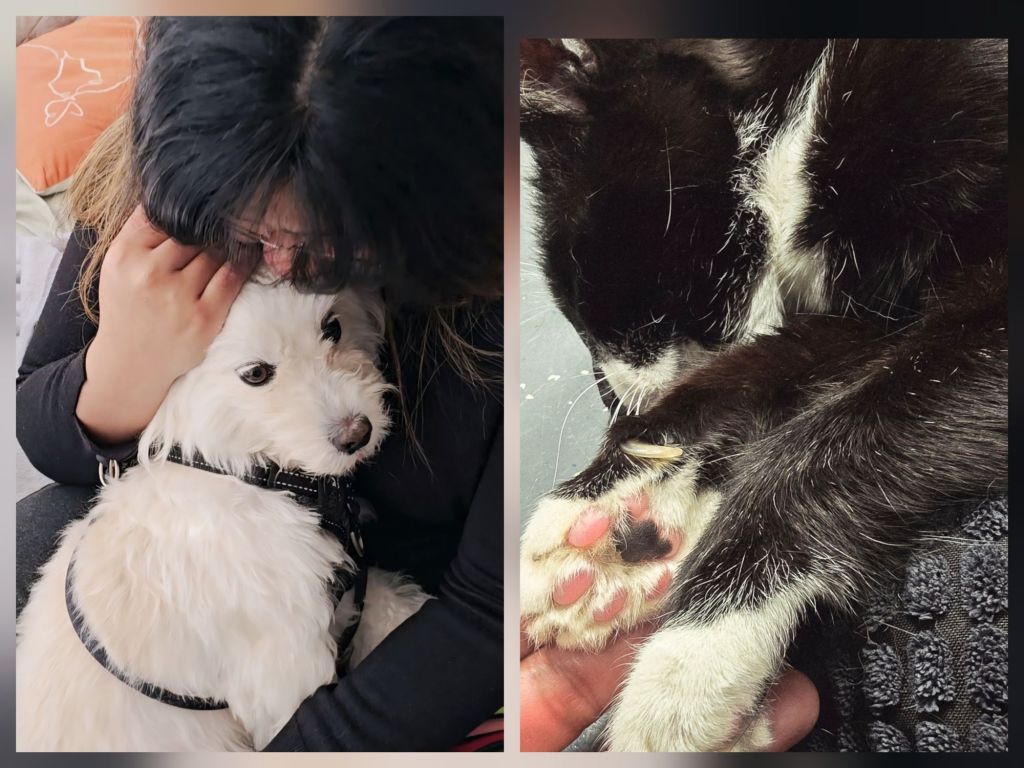
I learnt a long time ago that I sign up for grief the moment I bring my pets home, but I still do it anyway because I’m stupid with hope. And because, maybe, suffering for love is the only kind that makes sense.

I made the choice for what people would say: “play god” and end their lives. Twice. Once because a brain broke, once because a body did.

Phoebe – Jaga

And even if it was the kindest thing, it feels like I cheated the universe. It feels like power no human should have, because I have the power to decide, but not the power to be at peace with whatever the decision is, even if I decided not to do it.

I thought my heart would callous over. I was wrong. I learned that grief isn’t cumulative but singular. Each loss is its own flavour of hell and a fresh slap from the cosmos.

I learnt that my pets are not just pets but witnesses to my habits, my breakdowns, and my invisible days. And now that they’re gone, it’s like parts of my past were erased with them. Like some version of me, only they knew it, had died too.

I learnt that loving them never protected me from losing them. But losing them proves that I did love. And that’s a terrifying, beautiful, ridiculous thing.

But I also learned that what matter most are the mornings when they curled up next to me, the moments they looked at me as if to say, “I’m still here. For now. And that’s enough.”.

So I learned to hold those “for nows” tighter. To embrace the day, because some days, a purring body beside you matters more than whatever else you should be doing.

Comet

I feel like a comet. I was hurled from my home star system out into the wider universe. I was free and able to travel for long stretches through vast swathes of space relatively unencumbered.
But then something happened as I got closer to you. I felt the drag of your gravitational pull to your depth. Sometimes I get pulled in so close I can never break free from your influence, and am forever caught in your orbit. I didn’t realize it, I only knew that I’m under your control only after I’m already firmly in your grip.
Your psychological gravity is pernicious, but if I try to distance myselves too, I won’t be an unimpeded comet anymore, but merely a lacerated celestial compost that loose from my root.
Now you try to scrape me bit by bit by your abnormal fluctuation in your gravitational field until I am no more. But I can’t decide whether it’s better or worse than get flung again, abruptly, the same way I got pulled.

What it actually is?

I used to think what is death but a transition to a quieter place.
What is death but a redistribution of matter and energy.
What is death but a painless transition that separates the atoms that make up our existence..

But I was naive because of never losing absolute worth, till one time I lost it and felt like sinking my foot deeper into the earth
Never expected it to slice through moments and make them colder than before,
And being left behind as a fraction of life’s meaning that also caused tiredness and sore.


Is death a conclusion or just another opened door?

It’s a relief for some, and agony for some, but once you’re acquainted with it, seems like the darkness just becoming darker.
It’s painting ultimate realization of how fragile our selves against the solidity of the ground of eternal rest
And sometimes we can’t do anything but forced to enter its ambivalent embrace

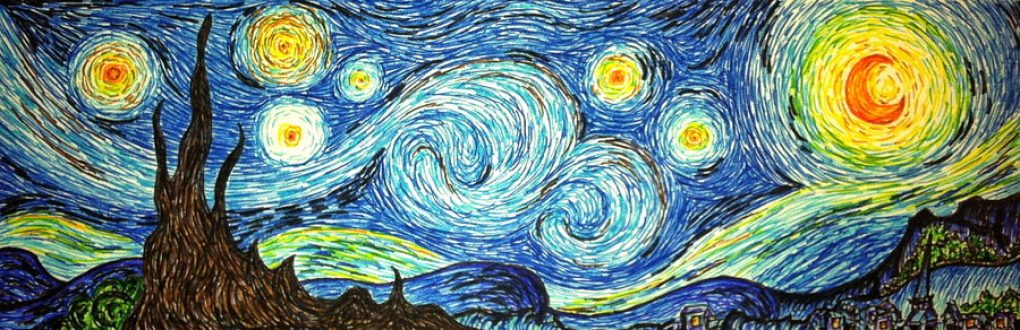
I found the starlight in your eyes

One night I saw you,
like a projection beamed in from a great distance,
you were fading,
like the light of a dying star
trying to find its shine once more.
But all the nights we spent
to invent forms of body heat
All the hours we spent
to distracting ourselves from the universal woe
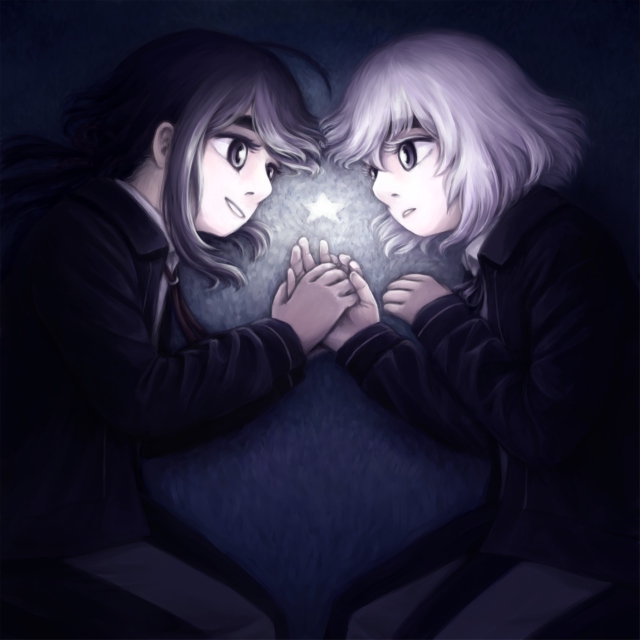
I found entire worlds between the rings in your eyes.
I found the starlight in your eyes
honenamamixaaa-7561

TYMB

Tuhan menciptamu karna dia Tuhan Yang Maha Bosan.
Tuhan ingin hiburan. Ingin tertawa.
Hiburan surga tak cukup lucu.
Pujian para malaikat terdengar terlalu indah dan juga monoton.
Ia ingin kekacauan. Ingin masalah.
Ia ingin buat cerita yang epic antara gelap dan terang.
Lalu diciptakan olehNya papan catur kehidupan,
Dan kamu ditempatkanNya didalam skenario kemurahan hatiNya.
Kamupun senang.
Kamu mencintai rezim keseharian,
Dan menikmati tiap debaran jantung yang menandakan intimidasi waktu yang ditetapkanNya untukmu.
Padahal kamu ini hanya sebuah lelucon. Mainan.
Bidaknya Tuhan. Budaknya kehidupan.

Venus and The Crescent Moon (May 21th 2015)

22196_625479220886562_8626927992675401571_n

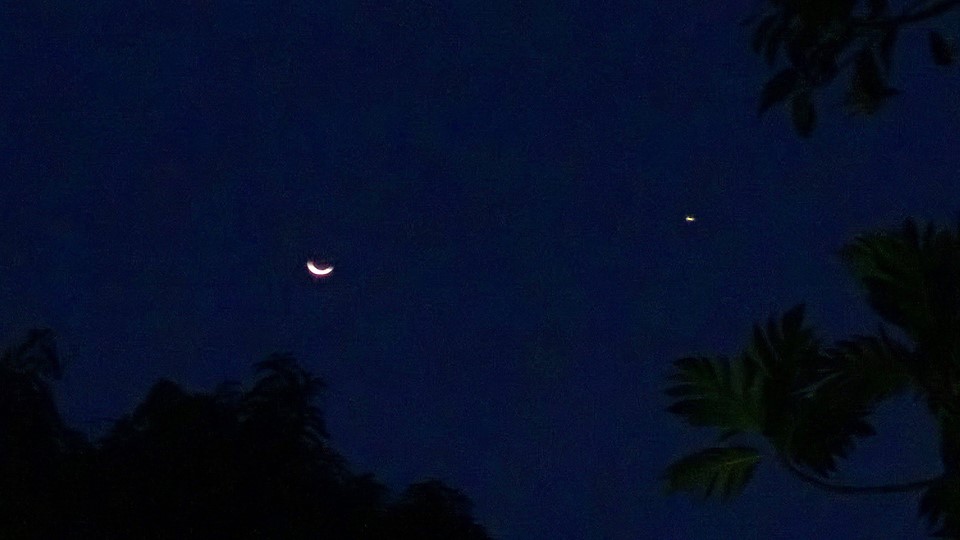
A floating crescent moon that appears tonight,
 Reminds me of your crooked smile..
And Venus stays beside it, in the same ink blue night sky.

I wonder if you and I were actually together, like the Moon and the Venus tonight..
How would it feels to sit beside you watching a crimson-apricot sun that slowly melts into the horizon night?
I wonder if you and I were actually together, like the Moon and the Venus tonight..
How would you feel if I lay beside you to give you warmth in the dark corner of night.

Good night, love.