Weird, Eccentric, or Just Flavorful?

Some people, even my mother, used the word frequently on me, and for a long time, I internalized it as a judgment, a signal that something about me didn’t fit.

“Be normal like other people”.

“Don’t be weird”.

“Don’t be yourself if you are a weird person”.

The word “weird” often comes from a social or relational lens. It implies that someone behaves differently from what is expected in a particular context, whether it’s family, school, or society at large. Usually comes from someone observing you and thinking: “Huh… that’s not what I’d do.”

For example, when I was a child, my mom called me weird when I made choices or had interests that didn’t match family norms. It felt very negative. However, I realize now that it wasn’t about harm, it was about difference from what she considered typical.

At school, my friends started calling me “eccentric.” At first, I wasn’t sure how to feel about that either. Over time, I realized that these two words, “weird” and “eccentric,” can carry very different meanings, and they reflect the perspectives of the people using them more than they define me.

By contrast, “eccentric” is often used by my friends or peers who observe my quirks with appreciation rather than judgment. They saw consistent patterns of behavior that are unique but coherent with my personality.
Eccentricity often has more neutral or positive tones. It can feel charming, quirky, or memorable, sometimes endearing rather than abnormal, with a neutral or positive tone. It usually comes from someone thinking, “Wow, that’s delightfully unusual!”
My friends calling me eccentric captured the essence of my individuality, the way I consistently approached life in my own unconventional style. I know it wasn’t a critique, and they befriended me anyway. It was a recognition.

Over time, I realized these two words aren’t the same, and that weirdness is often just a matter of taste.

Weird: Relative, context-dependent, often judgmental.
Eccentric: Individual, consistent, often celebrated.

Weirdness is highly relative, and context matters a lot here: What is “weird” in one environment may be perfectly normal in another. One trait may be considered unusual in one society or group but completely normal in another.

First, imagine society says vanilla ice cream is normal, while chocolate, strawberry, and mint are weird. Does this sound right?

Now imagine another scenario where everyone grows up tasting saffron, truffle, or ghost pepper ice cream. Everyone’s flavors are now unusual, so “weird” doesn’t exist anymore, or maybe even vanilla has become the new weird.

Another example, society has historically labeled “average colors” (say, beige, light blue, or gray) as normal. Any color outside that palette, like neon green, magenta, or deep violet, was considered weird.
Now, imagine a world where everyone is a unique, vivid color.
If everyone is neon or glittery or polka-dotted, then by definition, no color is “weird” anymore. Weirdness only exists relative to the average.

Yes, some flavors (ghost pepper) are arguably still more intense. And some some colors are still more unusual or striking than others. Neon green sticks out more than pale lavender, just like some minds are “weirder” on multiple dimensions or more divergent on multiple traits.

But this shows that it’s all basically about relativity: weirdness is a scale, not an absolute. “Normal” only exists if you have a reference point, and some colors are just more or less extreme relative to the current palette.


Anyway, in all honesty, I also meet people who are… well, truly extreme. Someone who did something I’d never do. That makes my quirks feel downright tame and I feel “normal” in comparison. But who knows, maybe for certain societies, that person is super normal?

This highlights that weirdness is a spectrum: some differences are minor quirks, others are extreme divergences from social norms or functional stability.

Over time, I’ve learned that self-labeling is powerful. Calling myself eccentric instead of weird aligns more closely with how I experience my individuality: unique, unconventional, but coherent.

I never call myself weird anymore. I realized that “weird” is just a mirror of someone else’s expectations, while “eccentric” reflects my own coherent, consistent patterns.

I sometimes still joke: “Normal people would do X, but I do Y.” But that’s just an observation: I notice patterns that differ from the majority. That means I know that based on my experience, most people (I know) didn’t choose the same thing as I did.
Understanding this distinction helped me embrace my quirks as authentic expressions of self, rather than as deviations that need fixing. It also reminded me that “normal” is mostly a social construct, and maybe, it’s better to just be yourself and what you’re comfortable with.

What I learned from my pets passing

I learnt a long time ago that I sign up for grief the moment I bring my pets home, but I still do it anyway because I’m stupid with hope. And because, maybe, suffering for love is the only kind that makes sense.

I made the choice for what people would say: “play god” and end their lives. Twice. Once because a brain broke, once because a body did.

Phoebe – Jaga

And even if it was the kindest thing, it feels like I cheated the universe. It feels like power no human should have, because I have the power to decide, but not the power to be at peace with whatever the decision is, even if I decided not to do it.

I thought my heart would callous over. I was wrong. I learned that grief isn’t cumulative but singular. Each loss is its own flavour of hell and a fresh slap from the cosmos.

I learnt that my pets are not just pets but witnesses to my habits, my breakdowns, and my invisible days. And now that they’re gone, it’s like parts of my past were erased with them. Like some version of me, only they knew it, had died too.

I learnt that loving them never protected me from losing them. But losing them proves that I did love. And that’s a terrifying, beautiful, ridiculous thing.

But I also learned that what matter most are the mornings when they curled up next to me, the moments they looked at me as if to say, “I’m still here. For now. And that’s enough.”.

So I learned to hold those “for nows” tighter. To embrace the day, because some days, a purring body beside you matters more than whatever else you should be doing.

The Weight of Belonging and The Fragility of Home

On Saturday, I was at a photo festival in Naarden. It was excellent! Thank you, Alexandra, for taking me there!

I also liked the theme: Home.

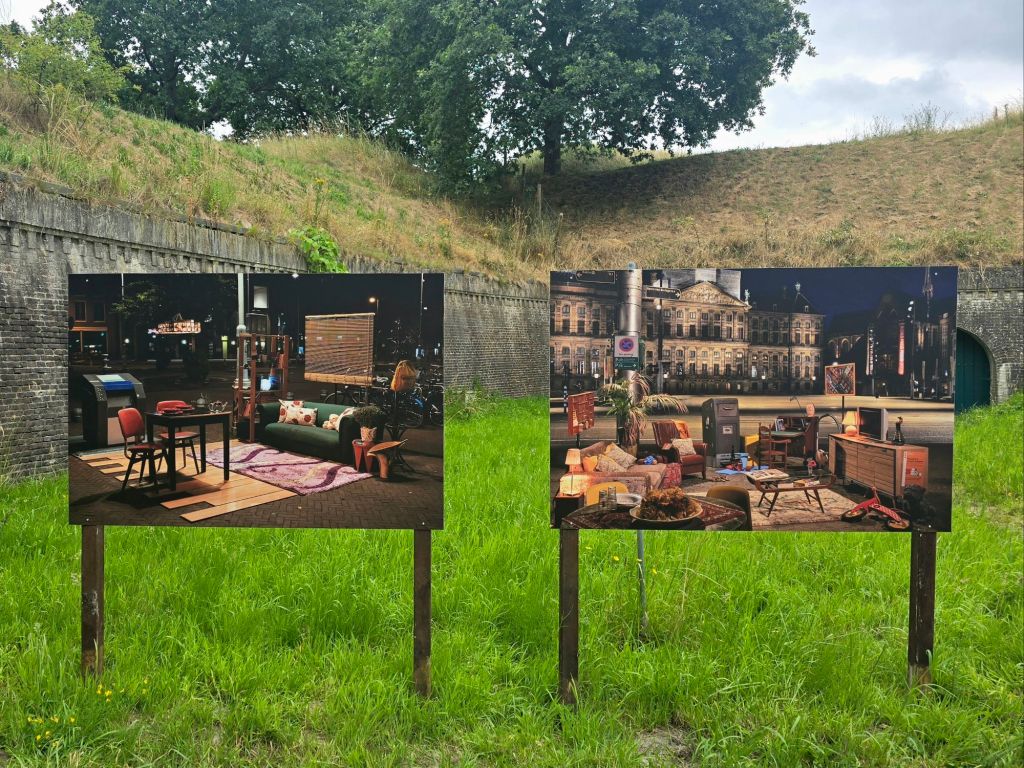
These photos standing in the middle of the grassy fort are the two I really like.

Each image showed a complete living room setup, placed not inside a house or building but out on the streets at night. Rugs, couches, lamps, bookshelves, everything carefully arranged and staged, absurdly cosy, and entirely exposed.


A living room without walls

I stood there, trying to decide whether I found it beautiful, ridiculous, or painfully familiar. Maybe all of them?

I felt fascination because they were beautiful and bold. I felt resonance and sadness, because they mirror my efforts to build “a life” in places (or systems) that will never truly contain me. I also felt admiration because they show vulnerability and what comfort means in the middle of chaos.

For me personally, somehow, these photos feel more familiar than the exhibition where they display a lot of portraits of immigrants.

A False Sense of Shelter

Is this idea where safety dragged into public place, a home?

Is it still a home when placed outside the boundaries of safety?

Is “home” a space, or is it just the act of pretending we belong somewhere?

Can we really ever make a home in this transient, collapsing world?

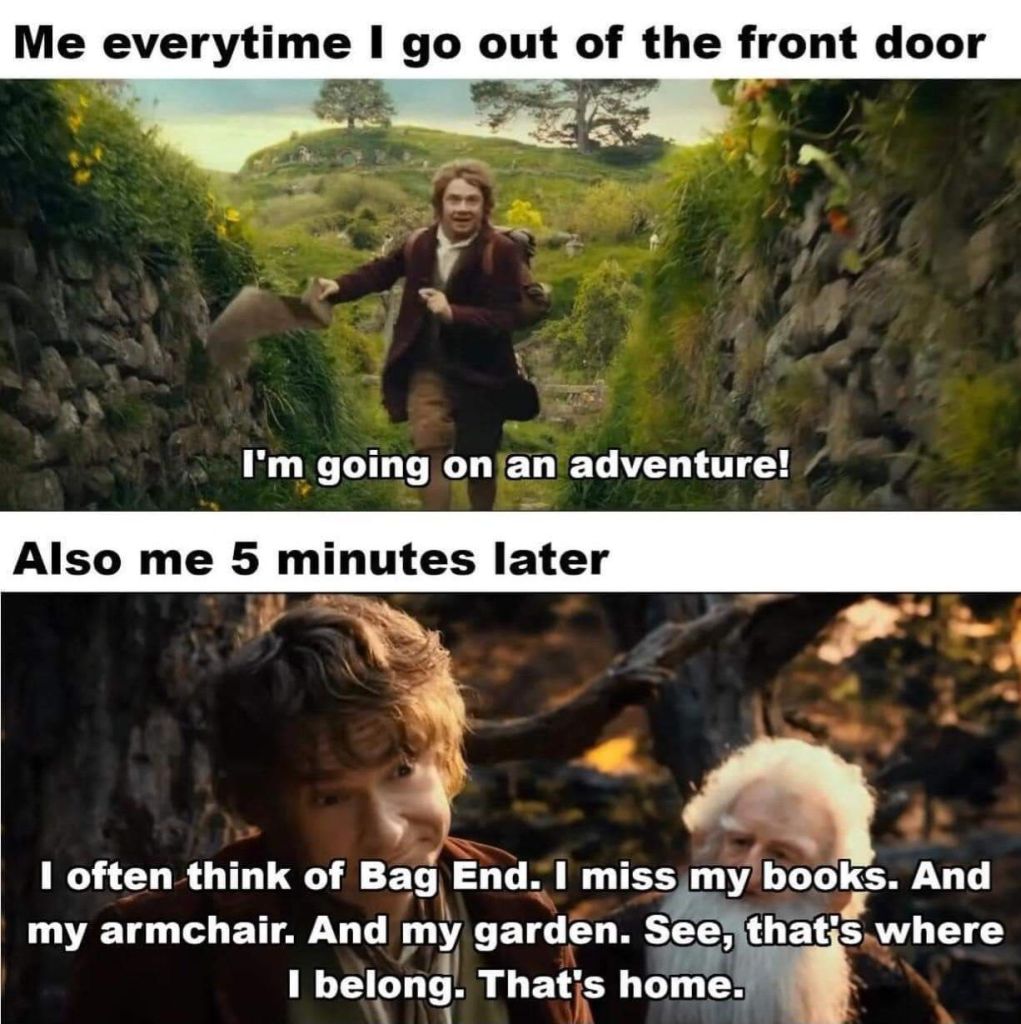
For me, who has spent most of my life not feeling like I belong, a home is a fragile thing.

I ask myself a lot, what does it mean to belong when you always feel slightly misplaced, no matter where you stand, anyway?

I moved countries, rebuilt my life, and questioned systems, identity, and purpose. These photos hit too personal. Like an attempt I know too well.

No matter how much I don’t feel human, I am after all, a human. And the human needs to belong, to anchor meaning, in a world that offers no guarantees.

In so many ways, I now feel more “at home” here, among strangers, in a different language, than I ever did in my so-called home country, or even among family. And yet, that feeling doesn’t really sit in stone, it wobbles on shifting ground.

The feeling of belonging… will it ever come?

Or is it just another room I decorate in my solitude, knowing I may never stay?

So what and where is home, really?

Maybe home is something we build because the world is indifferent and won’t offer us one?

Maybe it’s an act of rebellion against impermanence? An absurd ritual we repeat, over and over, to insist that something can be ours, even in a world that never really belongs to us?

Maybe it’s the ache that reminds me that I’m  still searching?

Or the fragile peace that comes from accepting I might never fully arrive?

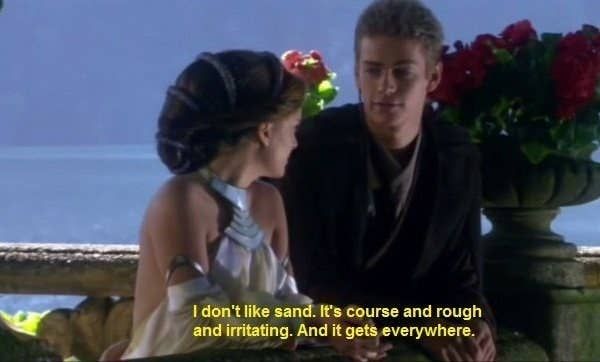
Anakin Was Right: Sand Is Coarse and Rough and Irritating.

Yes, I hate sand.

I also hate hot weather.


But I LOVE beaches.

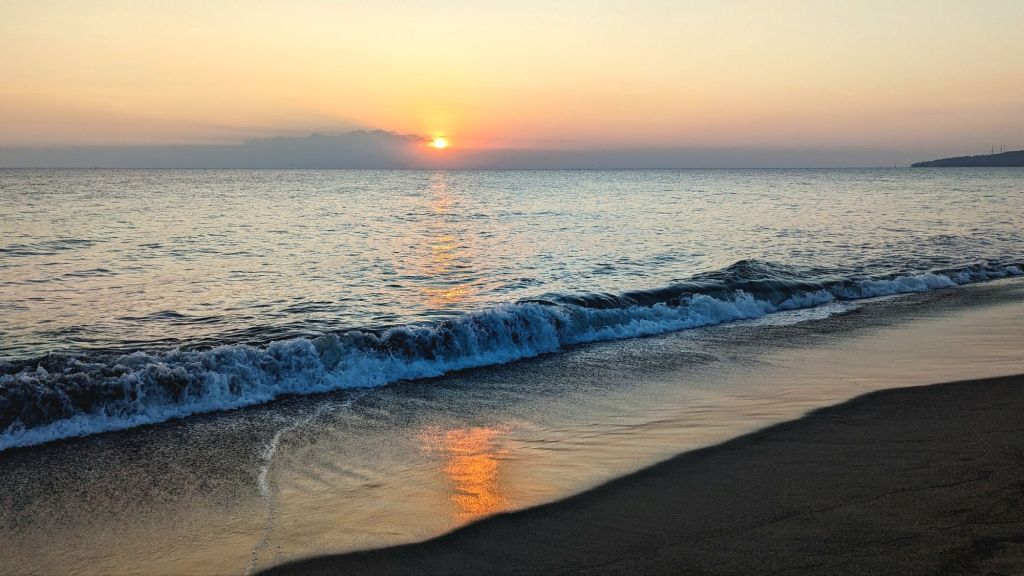
I mainly like going to the beach because I like how multiple parts of the earth combine to manifest as a whole; it embodies nature’s duality. The beach is like a testament to life’s grand scheme, where contradictions blend like a waking dream.

I always feel like being at the beach invites contemplation.
For example, the shifting sands beneath our wandering feet remind us of life’s transient, ephemeral fleet.
And with each passing wave comes a moment of reflection on time’s flow and its relentless persistence.
The horizon’s endless merge of sea and sky hints at boundless possibilities, like a reminder of our own quest for expansion to seek and explore.


The beach teaches humility, and that’s a profound lesson.
As we witness nature’s vastness, it astounds.
It humbles my ego and reminds me of my place.

From the fragility of shells, weathered and worn, to the majestic power of storms, fiercely torn.
A beach is a fusion of chaos and serene tranquillity
It’s my canvas for introspection, a gateway to pondering life’s profound direction.

In the whispers of waves and the sand’s gentle sway, I find a sacred place where I’m reminded of my transient grace.

Lombok, 2023

Misanthropy and anti-natalism are probably not really hate, but disappointment

People often think that being an antinatalist and a misanthropic is a bad thing and dismiss them as mere bitterness and hatred.

But what if they stem from compassion? A twisted kind, yes, but compassion nonetheless? 🤣

Let me explain to you why:

You start by holding humanity to a higher standard. You put the human race on a higher pedestal. You expect them to care, to be compassionate, and to care about things beyond physical gratifications and instinct.

Yet reality rebukes you, again and again, until you see the truth: this world is a futile, self-devouring machine. A hell that churns out misery while the masses shrug, indifferent to the ruin they perpetuate.

Then you inevitably are continuously disappointed with the reality and maybe even indirectly rebuked about why you’re here.

You fall into deep contemplation until you realize that this is such a futile, meaningless, and wrecked world. You realise it’s such a hellish place that won’t stop excreting so much misery, sorrow and despair, and you live among humans who don’t even put consideration on the damage they are causing in the future and the unspeakable deterioration they perpetuate.

The universe is just an uncaring and indifferent mass of emptiness. The universe doesn’t care and it should be okay, but these people also don’t. And life itself will always generate a selective pyramid with the few on top and the great majority at the bottom, who, being frail, have to pay the biggest bill and take on the worst parts of other forms of suffering besidesthe existential problems themselves.

You have to agree with being a slave to capitalism, being part of the plague called the human race, and dealing with those with decomposing flesh whom you cannot trust anymore.

Now you understand that life is actually not the opposite of death but the death’s waiting room, so it’s a good idea to not bring more children into this unnecessary suffering, agony, and misery.

Why drag more souls into this cesspool of agony? The only mercy is refusing to propagate it. The only true reduction of suffering? The end of sentience itself.

You think that so much endless and needless suffering could be avoided by complete extermination or disappearance of sentient life from the face of the cosmos.

When people hear anti-natalism, they sneer, “If life is so bad, why don’t you kill yourself?”.

But suicide doesn’t fix suffering. It just removes one witness. Anti-natalism isn’t about self-destruction but about preventing future pain.

Suicide is really an inefficient way of reducing the net amount of suffering in this world.

Of course, the real issue is this: not everyone sees the world as a hellscape.

Most don’t smell the slaughterhouse, they just learned to love the taste of meat. Most won’t question the feast, they’re just too busy swallowing.

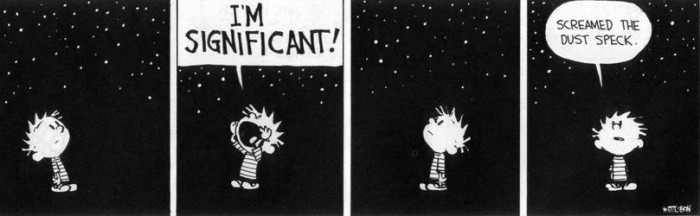
LOOK AT ME!!

“HEY LOOK AT ME!!!” as we screamed from a tiny corner on a speck of dust circling a small star, one of billions in a galaxy, one of billions in space.. but even a single solitary solipsist narcissistic person is really really insignificant in the grand scale of the universe.

The universe doesn’t just ignore us. It renders us mathematically insignificant.

13230131_766375370130279_402663221074683884_n

Life is Short

Life is short they said.
While we perish, history licks a finger and turns the page.
While we vaporized quickly, the universe keeps laughing at its cosmic joke.
While we spark briefly, we’re all also flying at incredible speed into the endless darkness of the unknown.
But if life is really, really short, then why do some moments seem to flatten out into endless streams?

Comet

I feel like a comet. I was hurled from my home star system out into the wider universe. I was free and able to travel for long stretches through vast swathes of space relatively unencumbered.
But then something happened as I got closer to you. I felt the drag of your gravitational pull to your depth. Sometimes I get pulled in so close I can never break free from your influence, and am forever caught in your orbit. I didn’t realize it, I only knew that I’m under your control only after I’m already firmly in your grip.
Your psychological gravity is pernicious, but if I try to distance myselves too, I won’t be an unimpeded comet anymore, but merely a lacerated celestial compost that loose from my root.
Now you try to scrape me bit by bit by your abnormal fluctuation in your gravitational field until I am no more. But I can’t decide whether it’s better or worse than get flung again, abruptly, the same way I got pulled.

Dusk

You are the solace of evening breezes
The dim gleam of sunset the water kisses
The seduction of an unseen hand that blurs the lights
The soft ice cream on my watch of satellites

I wasn’t ready for you yet,
But your embrace calm the blazing light’s threat
I squint my eyes longing for the dawdling lost sunset
But through your lens I shortly see vignette

For me you are my dusk
My chamomile and musk

When there’s only you around
My frantic, chaotic day
Languidly calming down
Becoming twilight, serene getaway


41477461_1485786338189175_2937569970457935872_n

What it actually is?

I used to think what is death but a transition to a quieter place.
What is death but a redistribution of matter and energy.
What is death but a painless transition that separates the atoms that make up our existence..

But I was naive because of never losing absolute worth, till one time I lost it and felt like sinking my foot deeper into the earth
Never expected it to slice through moments and make them colder than before,
And being left behind as a fraction of life’s meaning that also caused tiredness and sore.


Is death a conclusion or just another opened door?

It’s a relief for some, and agony for some, but once you’re acquainted with it, seems like the darkness just becoming darker.
It’s painting ultimate realization of how fragile our selves against the solidity of the ground of eternal rest
And sometimes we can’t do anything but forced to enter its ambivalent embrace