God didn’t choose me

I grew up inside religion, believing I would live well if I stayed close enough to God and His people. I tried for a long time. I struggled quietly, but in high school, belief loosened its grip on me.

When I see my childhood friends now and people from my past, from church, I feel sadness. Not because their lives are good. I’m not envious at all, and I’m glad that their lives unfolded gently, like they were met by the world instead of having to wrestle it. But I’m sad because I never really got to know them, and they never got the chance to know me. It feels like we passed each other behind glass, close enough to recognize, too far to touch.

What hurts is the sense that I was never understood back then, not truly. But I was an observer, trying to solve them like a puzzle.

And now that time has moved on, that door is sealed not by conflict but by silence. There is no moment left where I could finally explain myself or ask more questions.

Back then my Sunday school teacher often said, “God chose us; it’s not us who decides.” So this choice was not based on human merit. And every time, there’s always this sting inside my chest saying, “Then I’m not the chosen one. I must not be one of the chosen ones.”

For a child, “God chose us” doesn’t land as abstract theology. It lands as a verdict. Belonging might look easy for others, but painful for me, so my mind completes the sentence on its own: “Then I wasn’t chosen.” Not because I reasoned it out, but because my body kept score.

Well, I reasoned a lot of things, even as a kid. You can say that I’m a deep thinker, but I still think that conclusion also came from confusion plus rejection. I was the child who asked too many questions. My siblings lived in the same house, heard the same prayers, but they seemed to rest where I kept searching. Something in me noticed gaps before I had words for them.

If grace is unconditional, why do I feel so outside? The only answer a young heart can assemble is self-erasure: there must be something wrong with me. That sting wasn’t exactly disbelief, but the moment I internalized exile.

One quality about me, if you can call it a quality, or maybe rather my toxic trait, is that when love felt conditional, I tried to understand instead of simply feeling hurt. Confusion and rejection made me think.
And that thinking “saved me”. It also made me lonely. I was not the chosen one. I was different in a place that only knew how to love sameness.

I’m no longer religious, and that loneliness is sharper than before. Faith once promised a place to return to, a life where belonging waited if I tried hard enough, but I didn’t get it.

I think I have tried hard enough, but it’s always been like a sense that there is a room where warmth happens naturally, and I was never given or trusted with the key.

Now I know that even if I went back to church, even if I said the right words, I would never find that life. The wound isn’t even about God anymore. It’s about having been told, implicitly, that love selects, and selection skipped me.

And not because it’s false, but because it was never mine.

I felt it, I carried it, and I survived it.

I was not chosen.
Misanthropy and anti-natalism are probably not really hate, but disappointment

People often think that being an antinatalist and a misanthropic is a bad thing and dismiss them as mere bitterness and hatred.

But what if they stem from compassion? A twisted kind, yes, but compassion nonetheless? 🤣

Let me explain to you why:

You start by holding humanity to a higher standard. You put the human race on a higher pedestal. You expect them to care, to be compassionate, and to care about things beyond physical gratifications and instinct.

Yet reality rebukes you, again and again, until you see the truth: this world is a futile, self-devouring machine. A hell that churns out misery while the masses shrug, indifferent to the ruin they perpetuate.

Then you inevitably are continuously disappointed with the reality and maybe even indirectly rebuked about why you’re here.

You fall into deep contemplation until you realize that this is such a futile, meaningless, and wrecked world. You realise it’s such a hellish place that won’t stop excreting so much misery, sorrow and despair, and you live among humans who don’t even put consideration on the damage they are causing in the future and the unspeakable deterioration they perpetuate.

The universe is just an uncaring and indifferent mass of emptiness. The universe doesn’t care and it should be okay, but these people also don’t. And life itself will always generate a selective pyramid with the few on top and the great majority at the bottom, who, being frail, have to pay the biggest bill and take on the worst parts of other forms of suffering besidesthe existential problems themselves.

You have to agree with being a slave to capitalism, being part of the plague called the human race, and dealing with those with decomposing flesh whom you cannot trust anymore.

Now you understand that life is actually not the opposite of death but the death’s waiting room, so it’s a good idea to not bring more children into this unnecessary suffering, agony, and misery.

Why drag more souls into this cesspool of agony? The only mercy is refusing to propagate it. The only true reduction of suffering? The end of sentience itself.

You think that so much endless and needless suffering could be avoided by complete extermination or disappearance of sentient life from the face of the cosmos.

When people hear anti-natalism, they sneer, “If life is so bad, why don’t you kill yourself?”.

But suicide doesn’t fix suffering. It just removes one witness. Anti-natalism isn’t about self-destruction but about preventing future pain.

Suicide is really an inefficient way of reducing the net amount of suffering in this world.

Of course, the real issue is this: not everyone sees the world as a hellscape.

Most don’t smell the slaughterhouse, they just learned to love the taste of meat. Most won’t question the feast, they’re just too busy swallowing.

LOOK AT ME!!

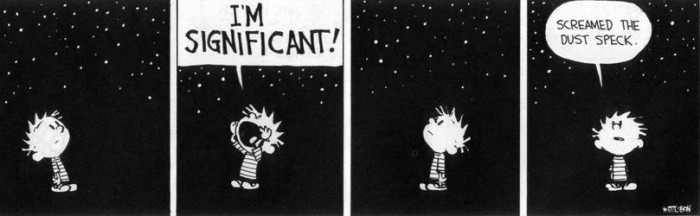
“HEY LOOK AT ME!!!” as we screamed from a tiny corner on a speck of dust circling a small star, one of billions in a galaxy, one of billions in space.. but even a single solitary solipsist narcissistic person is really really insignificant in the grand scale of the universe.

The universe doesn’t just ignore us. It renders us mathematically insignificant.

13230131_766375370130279_402663221074683884_n